Good lighting can make a home feel warmer, calmer, and easier to use. It can highlight favorite features, support daily tasks, and help each room feel more inviting. However, choosing comfortable lighting involves more than picking an attractive fixture.
The best lighting plan combines different light sources, suitable brightness, comfortable color, and thoughtful placement. Use the following tips to create a home that looks good and works well throughout the day.
Start With the Room’s Purpose
Before choosing bulbs or fixtures, consider how each room is used. A kitchen may need bright, even light for preparing food, while a bedroom usually benefits from softer lighting that feels relaxing.
Ask yourself:
– What activities take place in this room?
– Does the room receive much natural light?
– Are there areas that feel too dark?
– Do you need flexible lighting for different times of day?
– Will anyone use the space for reading, crafting, cooking, or working?
A room may need several types of lighting rather than one central ceiling fixture. Planning around activities helps you choose lighting that is both comfortable and practical.
Use Three Layers of Lighting
A balanced lighting plan usually includes three layers: ambient, task, and accent lighting.
Ambient Lighting
Ambient lighting provides general illumination for the entire room. Common examples include ceiling fixtures, chandeliers, recessed lights, and wall-mounted fixtures.
This layer should make it easy to move around without creating harsh shadows. Instead of relying on one very bright light, consider using several softer fixtures spread across the room.
Task Lighting
Task lighting adds focused illumination for specific activities. Examples include:
– Under-cabinet lights in the kitchen
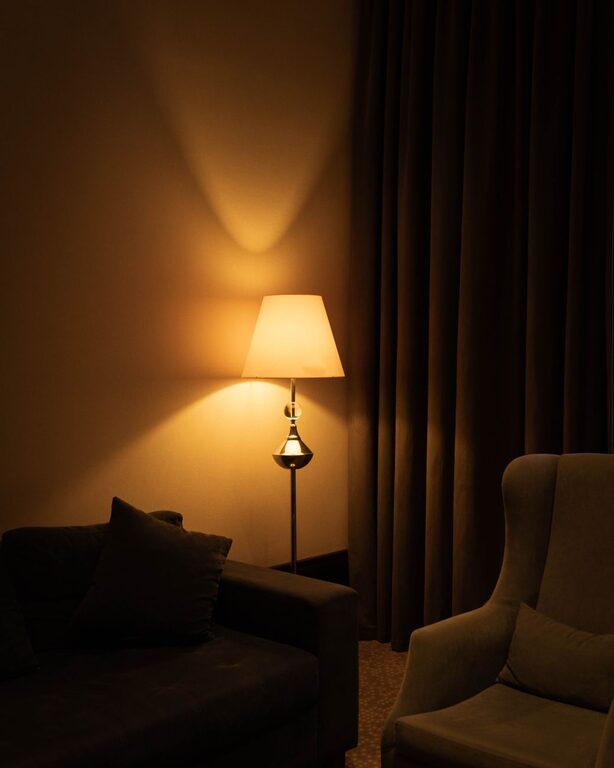
– Reading lamps beside a chair
– Desk lamps for a home office
– Vanity lights near a bathroom mirror
– Pendant lights above a kitchen island
Task lights should brighten the work area without shining directly into your eyes. Adjustable fixtures can be especially useful because they allow you to direct light where it is needed.
Accent Lighting
Accent lighting adds visual interest and helps highlight artwork, shelving, plants, or architectural details. Picture lights, small spotlights, and LED strips can all work well.
Accent lighting is not essential for every activity, but it can make a room feel more layered and welcoming. Use it to draw attention to features you enjoy rather than trying to illuminate every surface equally.
Choose a Comfortable Color Temperature
Light bulbs are often described by color temperature, measured in units called Kelvin. In simple terms, this describes whether the light appears warm and golden or cool and bluish.
– Warm light, around 2700K to 3000K, feels soft and welcoming.
– Neutral light, around 3500K to 4000K, appears clean and balanced.
– Cool light, around 5000K and above, looks crisp and bright.
Warm light is often a good choice for living rooms, bedrooms, dining areas, and entryways. Neutral light can work well in kitchens, bathrooms, laundry rooms, and home offices.
You do not need to use the same color temperature throughout your home. However, keeping nearby rooms fairly consistent can create a smoother visual transition. If possible, look at sample bulbs in your space before buying several of the same type.
Select the Right Brightness
Brightness is commonly measured in lumens. A higher lumen rating means the bulb produces more light, but brighter is not always better. Excessive brightness can cause glare and make a room feel uncomfortable.
Consider the size and color of the room. Dark walls, heavy curtains, and large furniture may absorb more light, while pale walls and reflective surfaces can make a space appear brighter.
For better control, use multiple lower-brightness bulbs instead of one extremely powerful bulb. Dimmable fixtures are another useful option because they allow you to adjust the light for different activities and times of day.
Always check that bulbs are compatible with the fixture and any dimmer switch. Some LED bulbs require specific dimmers to operate smoothly.
Reduce Glare and Harsh Shadows
Glare occurs when a light source is too bright or is positioned where it shines directly into your eyes. It can make reading, working, or relaxing uncomfortable.
To reduce glare:
– Choose fixtures with shades, diffusers, or frosted covers.
– Avoid placing bare bulbs at eye level.
– Position desk and floor lamps slightly to the side rather than directly in front of you.
– Use curtains or blinds to manage strong sunlight.
– Place recessed lights carefully instead of lining them up directly over seating.
– Select matte finishes for areas where reflections are distracting.
Shadows can also affect comfort. A single overhead light may cast shadows on countertops, faces, or work surfaces. Adding side lighting or under-cabinet lighting can create more even illumination.
Match Fixtures to Each Room
The size, shape, and location of a fixture all affect how comfortable it feels.
In a dining area, a pendant or chandelier should provide focused light without blocking views across the table. In a hallway, flush or semi-flush ceiling fixtures can provide useful illumination without taking up much space. In a bedroom, wall sconces or bedside lamps can offer a softer alternative to a bright overhead light.
For bathrooms, lighting near the mirror is often more useful than a single ceiling fixture. Lights placed on both sides of the mirror can reduce shadows on the face. In kitchens, combine general ceiling lighting with task lights under cabinets or above work areas.
Make sure fixtures are appropriately sized for the room. An oversized fixture can feel overwhelming, while one that is too small may not provide enough light.
Add Flexible Controls
Lighting is more comfortable when it can change with your needs. Dimmers are a simple way to create brighter light for chores and softer light for relaxing. Separate switches for different zones allow you to turn on only the lights you need.
You might use separate controls for:
– General ceiling lighting
– Kitchen work surfaces
– Reading areas
– Decorative or accent lights
– Outdoor or entry lighting
Smart bulbs and timers can also provide flexibility, but basic wall switches and dimmers are often enough for most homes. Choose controls that are easy for everyone in the household to understand.
Consider Energy Use and Maintenance
LED bulbs are a popular choice because they generally use less energy and last longer than older bulb types. They are available in many shapes, brightness levels, and color temperatures, making them suitable for most rooms.
When comparing bulbs, check:
– Lumens for brightness
– Color temperature for the appearance of the light
– Dimmability if needed
– Expected lifespan
– Fixture compatibility
– The bulb’s size and shape
Choose fixtures that are easy to clean and bulbs that are simple to replace. Dust and dirt can reduce the amount of light a fixture provides, so accessible designs may be more convenient over time.
Test Your Lighting Before Finalizing It
Lighting can look different in a store, showroom, and home. Wall colors, ceiling height, flooring, and natural light all affect how a bulb appears.
If possible, test one bulb or fixture before purchasing several. Observe it during the morning, afternoon, and evening. Check whether it creates glare, shadows, or unwanted reflections.
A comfortable lighting plan does not need to be complicated. Start with the room’s purpose, combine several layers, choose suitable color temperatures, and include controls where useful. With a little planning, you can create lighting that makes your home feel comfortable, functional, and inviting every day.